

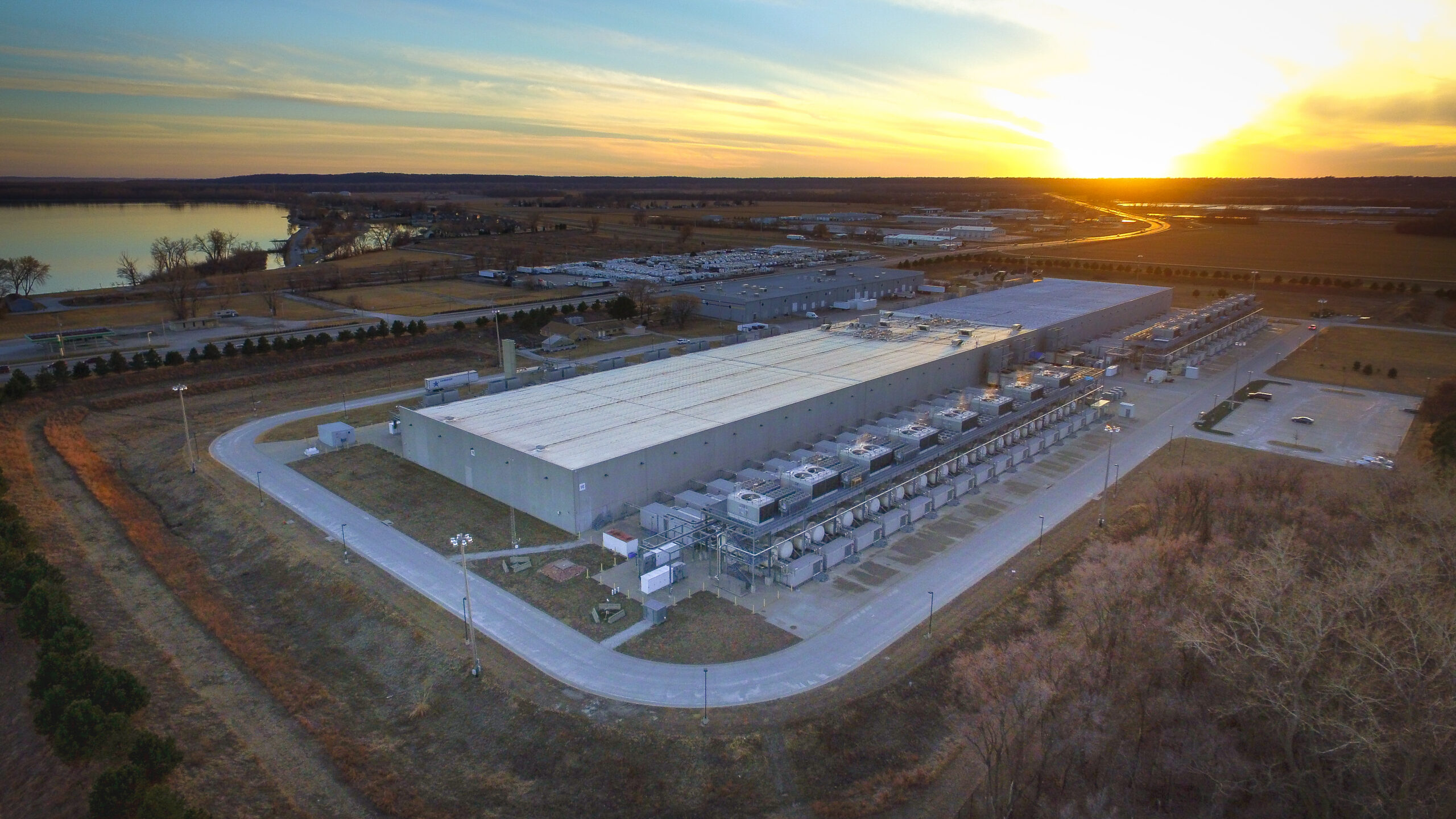
The race to dominate artificial intelligence and cloud computing is transforming communities across America as states continue approving massive new data center projects despite growing outrage from residents worried about soaring electric bills, water shortages, environmental damage, and disappearing green space.
From Virginia to Georgia, Texas, Arizona, Utah, Nevada, and Ohio, local governments are approving giant AI and cloud-computing campuses at a record pace as companies like Microsoft, Google, Amazon, and Meta scramble to build infrastructure capable of powering AI tools, streaming, cloud storage, and massive online platforms.
According to a recent Pew Research Center analysis, the United States now has more than 3,000 operational data centers, with over 1,500 additional facilities currently in development nationwide. Another industry tracker estimates there are more than 4,200 facilities across all 50 states.
Why States Keep Approving Them
Despite backlash, state and local officials continue greenlighting these projects because data centers bring billions in investment, construction jobs, tax revenue, and political bragging rights tied to becoming major AI and tech hubs. Cities surrounding Atlanta, Phoenix, Dallas, Northern Virginia, and Salt Lake City have seen explosive growth in proposed facilities over the past two years.
Virginia remains the country’s largest data center hub, particularly in Northern Virginia’s “Data Center Alley,” while Texas alone now hosts hundreds of facilities and is projected to become one of the world’s largest data center markets by 2030.
RELATED: Push to Oust Gov. Jeff Landry Gains Steam as Recall Petition Hits Louisiana
Supporters argue the facilities are essential for America’s AI race against countries like China and say the projects help modernize local economies. China has become one of the world’s fastest-growing data center markets, with thousands of facilities helping fuel its rapid rise in artificial intelligence, cloud computing, and advanced tech development.
Experts say the country’s massive investment in AI infrastructure gives it a major advantage in the global tech race because data centers provide the computing power needed for everything from AI models and surveillance systems to robotics and military technology. Unlike the U.S., where projects often face local opposition, China’s centralized government can approve and build facilities much faster. However, the boom also comes with concerns over massive electricity use, water consumption, and environmental strain as China’s data center energy demand is expected to more than double by 2030.
The Growing Backlash From Locals
Despite the fight for AI bragging rights, many residents across America say the costs are outweighing the benefits. Communities across the country have increasingly pushed back against giant data center developments, especially in suburban and rural areas where residents say projects are quietly approved before the public fully understands their long-term impact.
In Utah, residents recently erupted after officials approved a proposed AI data center project spanning more than 40,000 acres — reportedly larger than twice the size of Manhattan. Critics warned the facility, backed by business magnate Kevin O’Leary, could devastate local water supplies and dramatically increase pollution near the already struggling Great Salt Lake.
Meanwhile, officials in Hill County, Texas, recently approved a moratorium temporarily blocking new data centers after residents raised concerns over infrastructure strain, land use, and environmental damage. Opposition groups have also exploded throughout Virginia, where dozens of activist organizations have formed to challenge the nonstop expansion of server farms near residential neighborhoods.
Across social media and town hall meetings, critics often point to the same concerns:
- rising electricity costs
- pressure on water supplies
- noise pollution
- environmental damage
- land consumption
- increased fossil fuel use
- lack of transparency from officials
The Hidden Environmental Costs
One of the biggest concerns surrounding data centers is just how much electricity and water they consume. According to recent reporting and environmental studies, a single large AI-focused data center can use as much electricity as 100,000 households. Some facilities also consume millions of gallons of water every day to cool overheating servers.
Consumer Reports noted that some large facilities may use up to 5 million gallons of water daily — equivalent to the needs of more than 16,000 U.S. households. Researchers and environmental groups warn these demands could worsen drought conditions in already water-stressed regions like Arizona, Nevada, and parts of Texas.
The power demand is also becoming enormous. New research released this week found data centers now consume roughly 6% of all electricity generated in both the U.S. and U.K., far above global averages. The United States Energy Information Administration also recently warned that U.S. electricity demand is expected to hit record highs in 2026 and 2027, largely because of expanding AI infrastructure and data centers.
Could Your Electric Bill Go Up?
One of the biggest fears among residents is that ordinary consumers may ultimately absorb the cost of powering AI expansion. Experts say utilities often need expensive upgrades to transmission lines, substations, and energy infrastructure to support massive new facilities. Critics argue that some of those costs eventually trickle down to homeowners through higher electric bills.
Reports from energy analysts and consumer watchdog groups have already warned that electricity prices are climbing fastest near major data center hubs. In some regions, residents say they feel local governments are prioritizing billion-dollar tech companies over long-term sustainability and affordability for everyday people.
Why The Debate Is Only Getting Bigger
As AI tools become more integrated into daily life, experts say the demand for data centers is only expected to grow. But so is the resistance. Researchers warn that future expansion could require water capacity comparable to the daily supply needs of major cities if current growth trends continue.
That’s why fights over data centers are rapidly becoming one of America’s newest political and environmental battlegrounds — pitting economic development and AI dominance against concerns about sustainability, public resources, and quality of life.
RELATED: Spirit May Be Grounded, But JetBlue and Frontier Airlines Are Still Going Strong
