

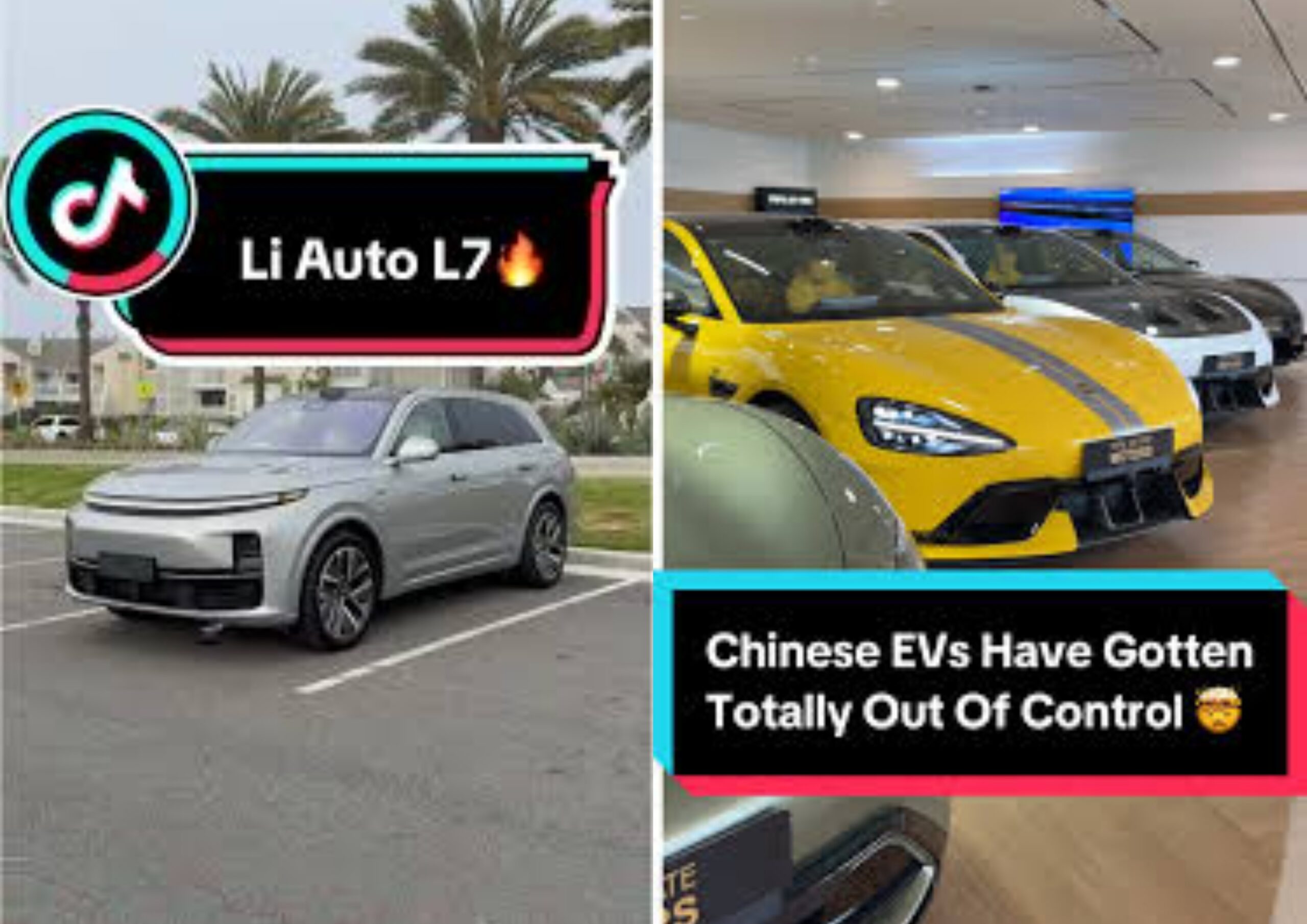
People scrolling social media may have noticed a growing wave of viral videos showcasing high-tech Chinese EVs packed with futuristic features and custom upgrades that currently aren’t available to most U.S. car buyers.
Chinese automakers are rapidly reshaping the global vehicle industry as demand for their electric vehicles continues to surge worldwide. Once viewed as budget alternatives, Chinese car brands are now competing directly with — and in some markets outperforming — legacy automakers from the United States, Japan, and Europe thanks to lower prices, advanced technology, sleek designs, and aggressive innovation.
In 2023, China officially surpassed Japan as the world’s largest vehicle exporter, marking a major shift in global automotive dominance. China exported roughly 4.9 to 5.2 million vehicles that year, overtaking Japan’s 4.4 million exports.
@forrestsautoreviews Would you get a YU7 or a Tesla Model Y? 🤔 • • • • • • #xiaomi #xiaomiyu7 #luxurycars #ev #chinesecars ♬ original sound – Forrest Jones
A huge reason behind that growth is electric vehicles.
Chinese companies like BYD, Xiaomi, Chery, Geely, and others have exploded in popularity by offering EVs packed with futuristic features at significantly lower prices than many Western competitors. Industry analysts say Chinese EV makers have become especially dominant because they treat cars more like “computers on wheels,” integrating software, AI, entertainment systems, and smartphone-like technology directly into the driving experience.
Companies like BYD have also emerged as serious global challengers to Tesla. BYD recently surpassed Tesla in global EV sales and now controls one of the world’s largest shares of the EV market.
RELATED: Business Schools Across America Are Slashing Tuition As MBA Applications Continue To Drop
Consumers in regions like Europe, South America, Southeast Asia, Africa, and the Middle East are increasingly gravitating toward Chinese vehicles because they often offer:
- lower prices
- longer warranties
- faster charging
- luxury-style interiors
- advanced self-driving features
- built-in entertainment systems
- customizable software experiences
In places like South Africa, Chinese automakers have dramatically increased market share as buyers prioritize affordability and technology over traditional brand prestige.
Meanwhile, Chinese EVs have become viral sensations online as videos showcasing rotating seats, in-car refrigerators, karaoke systems, autonomous parking, AI voice assistants, movie screens, and luxury interiors circulate heavily on TikTok and Instagram — features many consumers say they rarely see in American-made vehicles at similar price points.
@forrestsautoreviews $53K as is if this were converted to USD. Would you get this over a Tesla Model Y? 🤔🤷🏽♂️ • • • • • #liauto #liautol7 #chinesecar #luxurycars #ev #electriccar #foryoupage #foryou #cartok ♬ Jazz Bossa Nova – TOKYO Lonesome Blue
Experts also point to China’s control over battery production and supply chains as a major competitive advantage. China dominates much of the world’s EV battery manufacturing ecosystem, allowing its automakers to produce vehicles more efficiently and cheaply than many rivals.
The rise of Chinese EVs is becoming so significant that Western governments have responded with tariffs and trade restrictions. The U.S. imposed steep tariffs on Chinese-made EV imports, while European regulators have launched investigations into Chinese auto subsidies amid fears China could overwhelm global markets with lower-cost vehicles.
Still, demand continues climbing.
Analysts now say Chinese automakers are no longer simply “catching up” to legacy brands — they are actively redefining what consumers expect from modern vehicles, especially in the electric era.
RELATED: ‘BURRITOMAXXING’ Goes Viral As People Challenge Chipotle CEO’S “Just Ask for More” Claim
