

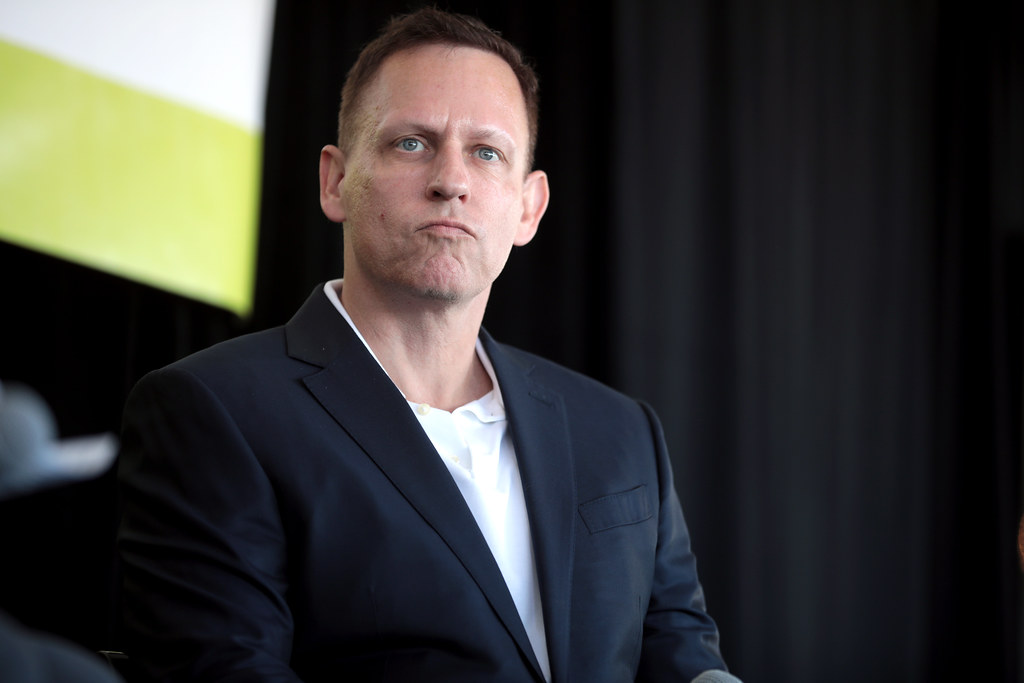
Tech billionaire and PayPal co-founder Peter Thiel is once again at the center of online debate after reports surfaced that he has temporarily relocated his family to Argentina, sparking questions about what the move says about the future of the United States, Argentina, and the growing influence of billionaire investors on global politics.
According to multiple reports, Thiel has purchased a luxury mansion in Buenos Aires, enrolled his children in local schools, and spent months building closer ties with Argentine officials. The billionaire has reportedly been drawn to the country by its low-tax environment, economic reform agenda, and ideological alignment with Argentine President Javier Milei.
Reports indicate that concerns over California’s proposed wealth taxes, political instability in the U.S., and even long-term risks such as artificial intelligence disruption and geopolitical conflict have influenced Thiel’s decision to establish a stronger presence outside the United States.
The move has fueled intense discussion online because Thiel is not just another wealthy expatriate. As the co-founder of PayPal and chairman of Palantir Technologies, he is one of the most influential figures in Silicon Valley, with deep connections to politics, defense technology, artificial intelligence, and venture capital.
RELATED: More Americans Than Ever Are Leaving The U.S. To Start New Lives Abroad, New Report Reveals
Why Critics See Red Flags
Much of the controversy stems from Thiel’s close relationship with Milei, a libertarian president whose aggressive economic reforms have earned praise from right-wing supporters and criticism from opponents. Milei’s administration has pursued sweeping deregulation, major government spending cuts, and privatization efforts while facing protests over rising poverty, shrinking public services, and economic instability during the country’s transition.
Critics argue that Argentina risks becoming a testing ground for wealthy foreign investors seeking favorable regulations, tax advantages, and access to strategic industries. Some observers have also raised concerns about potential investments involving data infrastructure, artificial intelligence, surveillance technologies, and natural resources.
Others point to Thiel’s involvement with Palantir, a company known for government data analytics and surveillance technology, as a reason for caution. Commentators in Argentina have questioned whether closer ties between tech billionaires and government leaders could influence decisions involving data privacy, public infrastructure, and national sovereignty.
Why Americans Are Paying Attention
For many Americans, the story has become symbolic of a broader trend: wealthy individuals and corporations increasingly moving assets, investments, and even residency to jurisdictions they view as more favorable.
Social media users have interpreted Thiel’s move as a warning sign about growing concerns among some members of the business elite regarding taxes, political polarization, and the future direction of the United States. Others see it as evidence that globalization allows billionaires to operate beyond the economic constraints faced by ordinary citizens.
“Imagine being responsible for destroying your neighborhood and then moving somewhere nice while you watch everyone pick up the pieces back home,” one X user wrote.
“This is not a man running from the state; this is a man shopping for the next state to optimize,” another user wrote. Call it what it is: post-democracy expansion.”
Supporters of Thiel, however, argue that the move simply reflects confidence in Argentina’s economic turnaround under Milei and represents the type of foreign investment the country needs to attract. Messaging rides the line of encouraging more migration to Argentina.
“Many people have been reading and wondering about their Argentina as their Plan B for a long time. Thiel confirmed it,” one X user wrote. “Every option on the planet, and this is where he brought his family. There’s no need to guess anymore about where your plan B should be.”
Whether viewed as a strategic investment, a political statement, or a billionaire’s contingency plan, Thiel’s reported relocation has become far more than a real estate story. For many online, it has evolved into a debate about wealth, power, technology, and who stands to shape the future of nations in an increasingly interconnected world.
RELATED: Why Chinese EVs Are Taking Over The Global Car Market — And Leaving Other Countries Behind
