

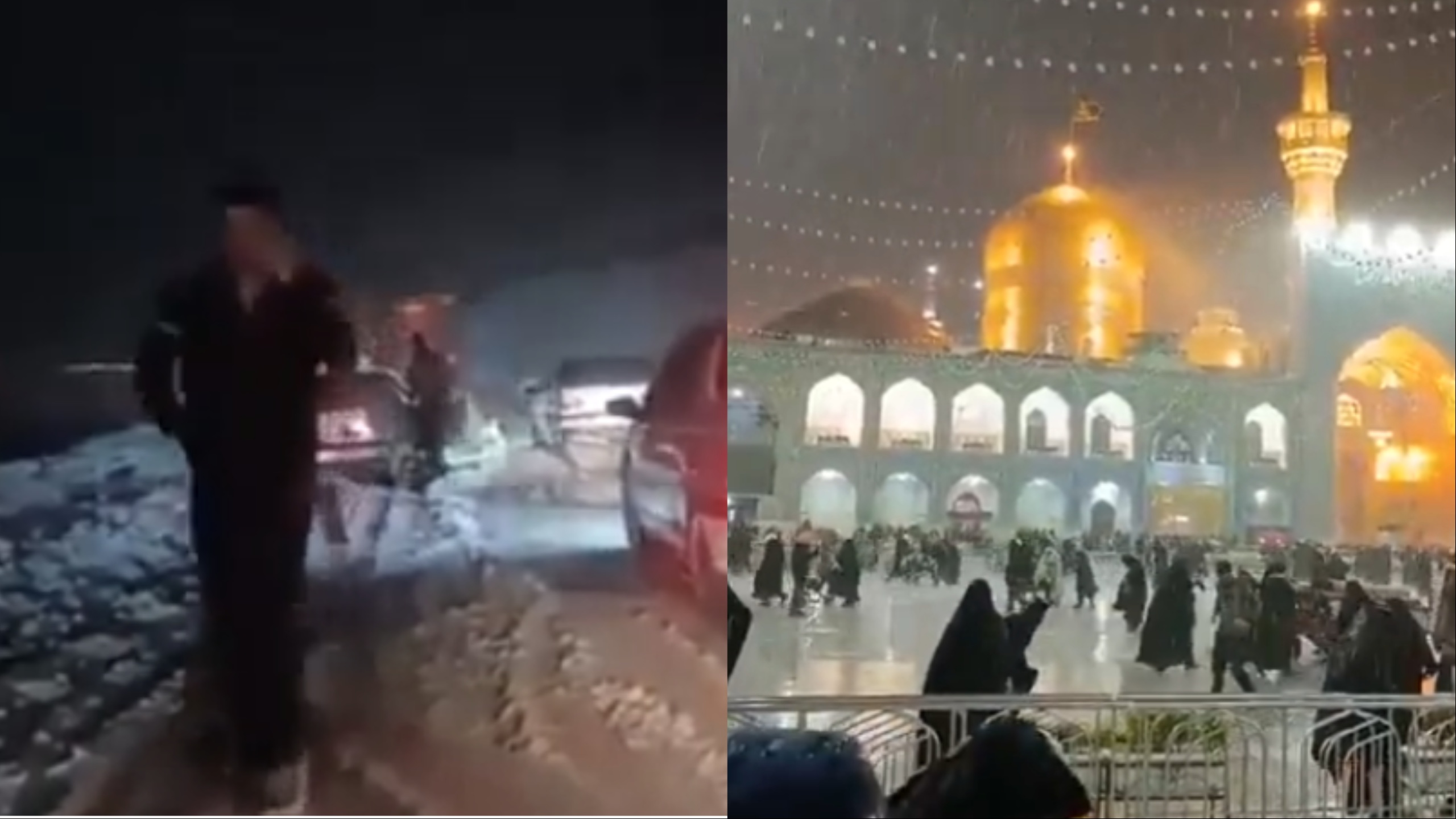
If you spend any time on social media, as most people do, you may have come across viral clips showing what looks like sudden rainfall—and even snowfall—across parts of Iran.
Some online claims suggest these unusual weather patterns are linked to a dramatic shift following Iran’s alleged destruction of a “secret cloud-seeding and weather-modification center” in the UAE. The speculation has fueled widespread conversation, with conspiracy theories emerging around the idea of U.S.-controlled weather manipulation.
“Iran was in drought for decades. No rain. Not an inch,” one viral tweet states. “After they attacked the rain seeding installations in Arab countries, their drought ended in 5 days. You put two and two together.”
Other videos claim that rain and snow have been falling in the capital of Tehran after the temperature shifted by 5 degrees in response to Iran allegedly bombing the Cloud-Seeding radars in the UAE.
Iran has long struggled with severe water shortages. According to the World Resources Institute, the country is now facing what it describes as “water bankruptcy,” driven by five consecutive years of drought and unsustainable consumption.
Just last year, Tehran—a city of more than 10 million people—faced a severe water crisis in late 2025 after five straight years of drought. Residents were subjected to rationing, while officials warned that evacuations could become necessary if reservoir levels failed to recover. The situation, worsened by mismanagement, aging infrastructure, and heavy agricultural demand, also triggered widespread protests from farmers over water access and rights.
However, Iranian officials, military figures, and some experts have for years accused Israel and the United States of manipulating the weather—at times claiming these countries are “stealing” rain clouds or engineering drought conditions. Often described as “cloud stealing,” these allegations have surfaced periodically since at least 2011 and tend to intensify during periods of severe drought, including in 2018 and 2025.
More recently, pro-Iranian outlets and certain websites have suggested that the destruction of U.S. military assets—such as the AN/FPS-132 early warning radar in Qatar and THAAD missile defense systems—disrupted an alleged regional “weather control network” believed to be contributing to Iran’s water shortages.
Now, as videos of rain and snowfall continue to circulate across social media, they’ve renewed attention around Iran’s long-standing claims of weather manipulation—while also fueling broader conspiracy theories about the tactic allegedly being used on a global scale.
“Weather manipulation is no longer just a conspiracy theory and honestly, it hasn’t been for a while,” one X user wrote. “This just proves it even further.”
“They are currently doing the same thing to the grain belt of the United States as well as the cattle country,” another user claimed.
Despite limited coverage from mainstream media on the alleged weather manipulation claims, social media has been flooded with speculation, as users share their own theories and interpretations of what’s unfolding. Meanwhile, tensions in the Middle East continue to escalate. Iran’s Foreign Minister, Abbas Araghchi, recently arrived in Islamabad amid renewed hopes for diplomatic talks between the U.S. and Iran. U.S. envoys Steve Witkoff and Jared Kushner are also expected to travel to Pakistan, according to the White House.
At the same time, the U.S. has imposed new sanctions targeting a major China-based oil refinery, along with dozens of shipping companies and tankers accused of transporting Iranian oil. In Lebanon, the Ministry of Health reported that six people were killed in Israeli strikes on the country’s south, just one day after Donald Trump announced that a temporary ceasefire had been extended.
Violence has also intensified in Gaza, where Israeli attacks reportedly killed at least 12 Palestinians, including six police officers, according to medics and local officials.
SOURCE: Economic Times, CSIS, Al Jazeera
